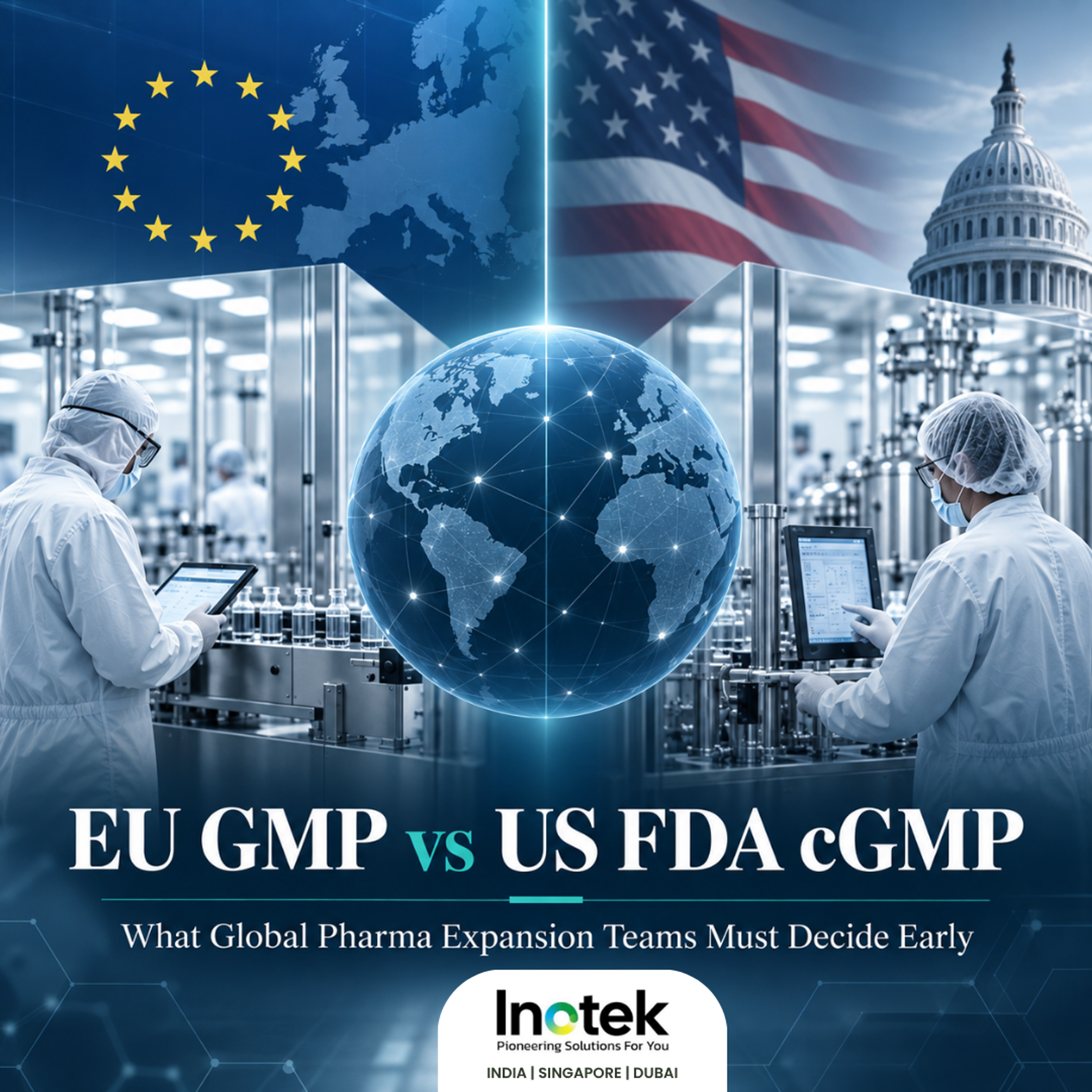
The Risks of Treating GMP Compliance as a Post-Project Activity
March 13, 2026

The Hidden Cost of Post-Project GMP Compliance in Pharmaceutical Projects
Pharmaceutical projects often prioritize delivery milestones, including facility build timelines, equipment installation, and operational readiness. Yet one critical engineering and regulatory factor is frequently deferred until the final stages: GMP compliance. When regulatory expectations are evaluated only after key engineering decisions are locked, regulatory risk rises significantly. Facility layouts, design assumptions, and documentation structures may embed regulatory gaps that are difficult to correct during late-stage validation or pharmaceutical audits.
How Compliance Risk Emerges When GMP Compliance Is Delayed
When regulatory requirements are handled as a post-project activity rather than an engineering design driver, regulatory exposure accumulates across facility design logic, engineering decisions, and documentation.
Engineering Decisions That Shape Compliance Risk
In any pharmaceutical project, early engineering decisions determine how effectively the facility architecture supports GMP-aligned operations. Decisions related to zoning, material movement, and environmental control systems define whether the plant operates within compliant design logic or introduces structural constraints that later trigger inspection or validation challenges.
Facility Zoning and Segregation Strategy
Facility zoning determines how clean and non-clean areas interface within the manufacturing environment. Weak segregation logic can introduce cross-contamination pathways, unstable pressure differentials between zones, or uncontrolled interaction between operational areas. For example, poorly engineered transitions between Grade C and Grade D environments may disrupt pressure cascades and compromise contamination containment during routine operations. When a zoning strategy is engineered without regulatory interpretation, regulatory deficiencies may surface during inspection or operational qualification.
Material and Personnel Flow Design
Material and personnel flow architecture determines how products, components, and operators move through controlled environments. Poorly engineered flow paths often create cross-traffic, exposure to contamination, and operational complexity. These structural design weaknesses are frequently identified during pharmaceutical audits and can trigger inspection observations or regulatory concerns.
Environmental Control and Cleanroom Strategy
Environmental control systems, including cleanroom classification, airflow architecture, and pressure cascade design, must align with regulatory expectations for pharmaceutical manufacturing. For example, unstable pressure cascades between classified zones or poorly defined airflow direction can create contamination migration pathways that become difficult to justify during qualification or inspection.
These parameters also form part of the facility’s broader Contamination Control Strategy (CCS) under EU-GMP Annex 1. When environmental design intent is not clearly defined during facility engineering, later CQV validation activities may struggle to demonstrate stable environmental control and regulatory defensibility.
How Pharmaceutical Audits Expose Design-Stage Issues
Pharmaceutical audits frequently reveal engineering decisions that were made without adequate regulatory context. During a GMP compliance audit, inspectors often identify layout inconsistencies, gaps in environmental-monitoring coverage, or procedural workarounds created to compensate for flawed design assumptions. For example, environmental monitoring probe placement that does not account for airflow patterns or operator intervention zones may fail to capture representative contamination risks.
Regulatory Triggers Behind GMP Compliance Failures
Failures related to GMP expectations rarely originate from a single operational mistake. Instead, they typically result from a combination of engineering, operational, and documentation weaknesses that collectively increase regulatory exposure.
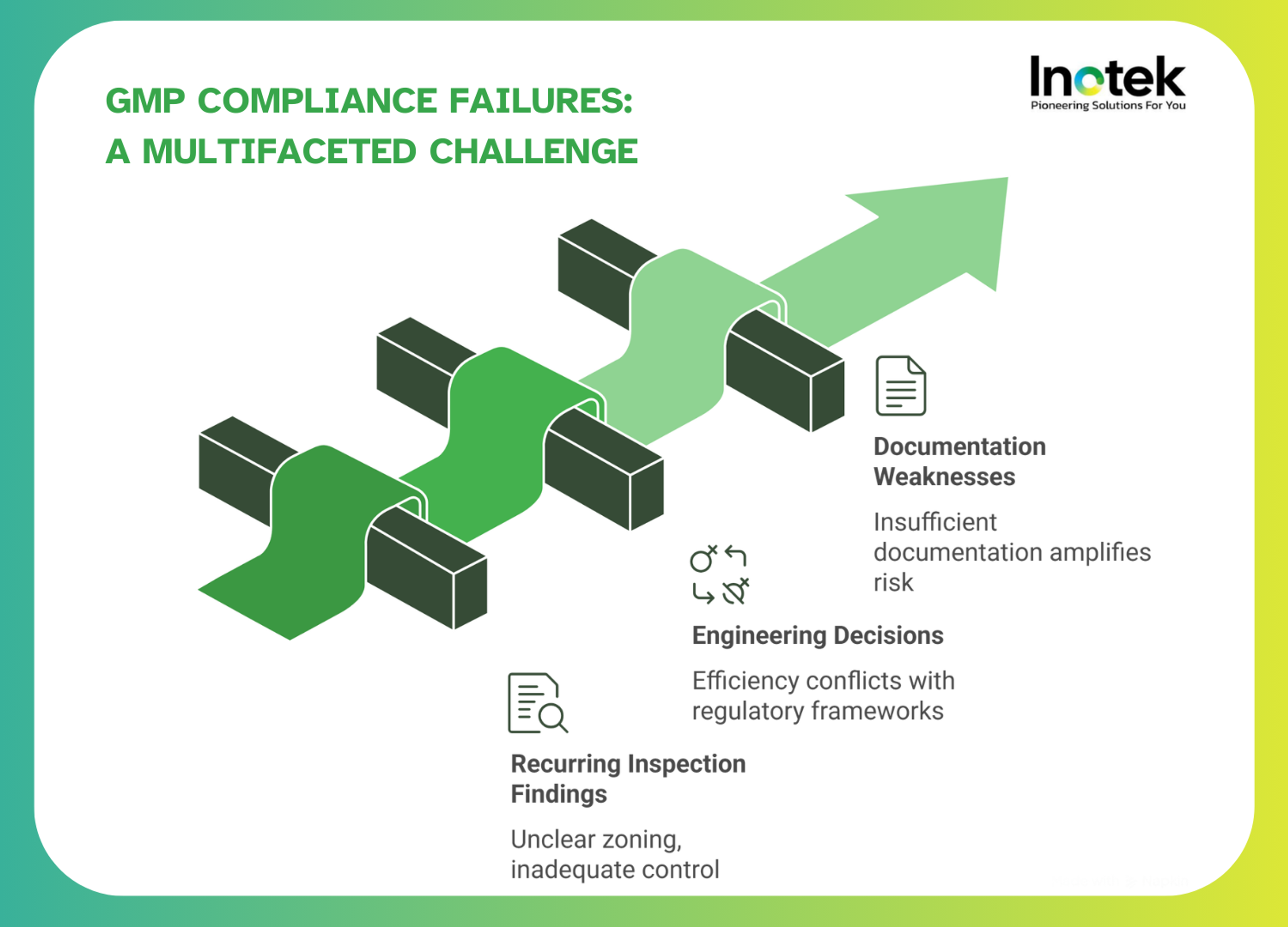
Recurring Inspection Findings in Pharmaceutical Facilities
Regulators repeatedly identify similar patterns during pharmaceutical audits. These include weak zoning logic, incomplete contamination-control strategies, inadequate environmental-monitoring coverage, and poorly engineered process flows. In many cases, these issues trace back to design-stage engineering assumptions rather than operational errors, and often reflect the absence of a clearly defined facility-level Contamination Control Strategy (CCS).
Engineering Decisions That Conflict With Regulatory Compliance Frameworks
Engineering teams often optimize layouts for efficiency, equipment access, or construction practicality. However, these decisions can conflict with regulatory compliance frameworks that prioritize contamination control, traceability, and process segregation. When engineering logic diverges from GMP expectations, facilities may face compliance validation challenges.
Documentation Weaknesses in GMP Compliance Audits
Documentation gaps can intensify regulatory exposure. In many pharmaceutical projects, the engineering rationale behind layout decisions, contamination-control strategies, and design trade-offs is not adequately documented. During a GMP audit, the inability to demonstrate regulatory intent or engineering justification can lead to inspection observations.
Compliance Risk Management in Pharmaceutical Projects
Effective risk management for regulatory alignment requires embedding regulatory interpretation throughout the lifecycle of a pharmaceutical project rather than introducing it only during final validation phases.
Risk-Based Frameworks for Project Compliance
Structured regulatory risk management frameworks enable teams to identify potential regulatory conflicts early in the engineering lifecycle. These frameworks combine risk assessment, engineering design review, and regulatory interpretation to ensure project execution aligns with GMP expectations.
Cross-Functional Governance for Compliance Decisions
Pharmaceutical projects require coordination between engineering teams, quality leaders, regulatory specialists, and operational stakeholders. Strong cross‑functional governance ensures that engineering decisions are evaluated for both technical feasibility and regulatory defensibility.
Regulatory Interpretation Before Engineering Finalization
Regulatory guidelines for pharmaceuticals must inform engineering decisions before facility layouts and system concepts are finalized. When regulatory interpretation drives design development, regulatory risk management becomes proactive rather than corrective.
Compliance Risk Assessment in Pharmaceutical Facilities
Structured risk assessment provides an engineering approach for identifying regulatory vulnerabilities embedded in facility design, operational workflows, and documentation frameworks.
Conducting a Structured Compliance Risk Assessment
A structured assessment evaluates layout decisions, contamination-control concepts, process flows, and environmental-monitoring strategies. In practice, this often includes reviewing pressure-cascade stability across classified areas, airflow pathways within cleanrooms, and environmental-monitoring point placement to ensure that contamination risks are properly captured during facility operation. Assessing these factors early allows organizations to prevent regulatory failures during inspections.
Performing a Compliance Gap Analysis
Compliance gap analysis compares engineering and project decisions against regulatory frameworks and GMP expectations. This evaluation highlights inconsistencies between facility design intent and regulatory requirements before they surface during pharmaceutical audits.
Aligning Design with Regulatory Guidelines for Pharmaceuticals
Aligning facility engineering with regulatory guidelines for pharmaceuticals requires translating regulatory language into clear design logic. When regulatory interpretation is embedded into design documentation, compliance validation becomes significantly more predictable.
Commissioning, qualification, and validation are critical in regulated pharmaceutical facilities. However, CQV activities cannot fully compensate for engineering decisions that conflict with GMP compliance principles.
The Purpose of CQV in Regulated Facilities
CQV ensures that facilities, utilities, and equipment perform in accordance with defined regulatory and operational requirements. Through structured testing and documented evidence, CQV validation confirms that engineered systems operate consistently within approved parameters.
Structural Limits of CQV Validation
CQV validation confirms performance, but cannot redesign facility layouts or correct flawed contamination control architecture. If engineering decisions contradict regulatory expectations, validation teams may struggle to demonstrate sustainable compliance.
Retrofitting GMP Compliance After Project Completion
Retrofitting regulatory compliance after project completion often requires facility modifications, procedural compensations, or additional control systems. These changes increase project costs, extend timelines, and still leave residual regulatory risk.
Global Regulatory Compliance Frameworks for Pharma Facilities
Pharmaceutical manufacturing facilities must align with multiple regulatory frameworks depending on the markets they intend to serve.
EU-GMP Facility Design Expectations
EU‑GMP places strong emphasis on contamination control strategy, facility segregation, environmental monitoring, and documented design rationale. Under Annex 1 expectations, manufacturers are required to define a comprehensive Contamination Control Strategy (CCS) that integrates facility design, operational controls, environmental monitoring, and process safeguards. Facilities must demonstrate that engineering decisions directly support this integrated contamination control framework.
US FDA Facility Compliance Requirements
US FDA regulations emphasize process control, facility suitability, and robust documentation. Manufacturing environments must demonstrate that facility design supports reliable production while minimizing contamination and mix-up risks.
WHO and PIC/S Alignment in GMP Compliance
WHO and PIC/S frameworks reinforce many EU-GMP and FDA expectations while supporting global harmonization of GMP standards. Facilities operating across international markets must ensure their engineering design logic satisfies multiple regulatory interpretations.
Operational Controls for Project Compliance
Operational governance mechanisms help maintain visibility into regulatory alignment throughout the lifecycle of a pharmaceutical project.
Building a Project Compliance Checklist
A structured project compliance checklist enables teams to track regulatory considerations across design reviews, engineering milestones, and validation planning. This ensures regulatory requirements in project management remain visible during critical engineering decisions.
Internal Compliance Reviews During Project Phases
Periodic internal reviews allow organizations to evaluate regulatory progress before external pharmaceutical audits occur. These reviews often include compliance gap analyses and assessments of engineering documentation.
Continuous Monitoring of GMP Compliance
Continuous monitoring mechanisms allow organizations to track environmental performance, operational controls, and documentation alignment. Sustained oversight of these systems supports long-term regulatory alignment and reduces emerging inspection risks.
How Inotek Enables Inspection-Ready GMP Compliance by Design
At Inotek, regulatory intelligence is embedded at the earliest stages of pharmaceutical and biotech facility planning. Rather than treating GMP compliance as a late-validation exercise, our regulatory-first consulting approach integrates regulatory interpretation into the facility design logic, project strategy, and validation planning. This helps organizations prevent regulatory gaps before they arise during CQV validation or pharmaceutical audits.
Key Areas Inotek Focuses On:
GMP-Aligned Facility Design Logic: Inotek advises project and engineering teams on facility zoning, segregation strategies, and contamination-control concepts that align with global GMP requirements. By embedding regulatory interpretation at the conceptual stage, organizations avoid design decisions that later trigger inspection findings.
Early Compliance Risk Assessment: Through structured risk assessment and design-stage reviews, Inotek helps organizations identify regulatory gaps in layout decisions, process flows, and cleanroom strategies. This early evaluation strengthens regulatory readiness before challenges surface during validation or inspection.
Engineering Decisions Aligned With Regulatory Frameworks: Many regulatory issues originate from engineering choices made without a proper compliance context. Inotek guides teams in aligning material flow, personnel movement, and environmental control strategies with global regulatory frameworks and GMP expectations.
Validation Strategy and CQV Readiness: Inotek provides advisory services on validation master planning and CQV alignment to ensure facility design, operational intent, and quality systems support defensible validation outcomes. This ensures CQV confirms compliance rather than attempting to correct earlier design gaps.
Ready to strengthen compliance risk management in your pharmaceutical projects with a regulatory-first approach?
Book a consultation today and learn how Inotek can help ensure your facilities are inspection-ready from the earliest stages. Visit www.inotek.co.in/contact-us.
FAQs
What is compliance risk in GMP compliance for pharmaceutical projects?
Compliance risk is the likelihood that a pharmaceutical project will fail to meet regulatory requirements due to design flaws, documentation gaps, or operational misalignment with compliance requirements.
Why does treating GMP compliance as a post-project activity increase regulatory risk?
When regulatory requirements are addressed after engineering decisions are finalized, regulatory gaps may already be embedded in facility design, operational flow, and documentation structures, making them difficult to correct during validation.
How can regulatory risk management prevent inspection failures during pharmaceutical audits?
Regulatory risk management integrates regulatory interpretation, risk assessments, and engineering reviews early in a pharmaceutical project, enabling organizations to identify and address potential regulatory gaps before inspections.
How does CQV validation support regulated pharmaceutical facilities?
CQV validation confirms that facilities, systems, and equipment operate in accordance with defined regulatory and operational requirements, providing documented evidence that the manufacturing environment supports compliant production.
More blogs
Related reading
8 Regulatory Decisions Before CGT Engineering Freeze

Dead Legs in Pharma Utilities: Why CAPA Cannot Fix Poor Design